
National Seminar on Earthquake Safety in India: Towards Safety of Built Environment and Heritage Structures
Commemorating the 25th Year of 2001 Bhuj Earthquake
23-24 January 2026
Rajasthan International Center Jaipur
Organised by


Download Brochure
Program Schedule
Register
The registration fee for the seminar is Rs. 2000/-
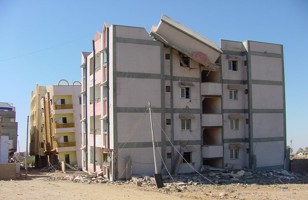
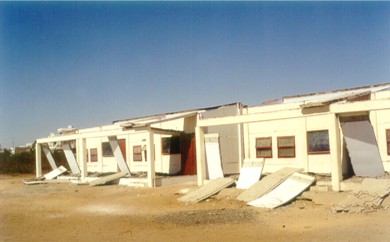
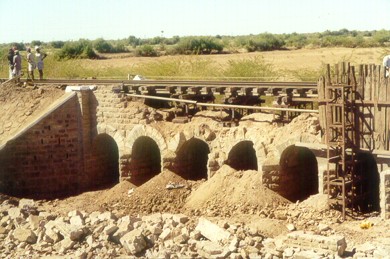
2001 Bhuj Earthquake
India has experienced four significant earthquakes in the past 125 years. The 2001 Bhuj Earthquake, which occurred on January 26, 2001, was the first major earthquake in urban India that tested the effectiveness of the “modern” built environment. During this event, numerous multi-storey buildings with open ground floors, bridges, water tanks, and earthen dams collapsed in a brittle manner. Extensive liquefaction occurred within the epicentral area, affecting the landmass. Open ground storey and other irregularities in buildings led to a loss of approximately 13,800 lives and injuries to over lakhs of people. About 2,30,000 houses collapsed, and over 10 lakhs were damaged. Specifically, the collapse of around 3,500 school rooms, the district hospital, the office-cum-residence of the district magistrate, and structures of the Indian Air Force Base, and multiple mid-rise buildings in Ahmedabad (~300kms away from the epicenter) demonstrated that all types of structures (critical, special, important and normal) were vulnerable, and life safety was not guaranteed.
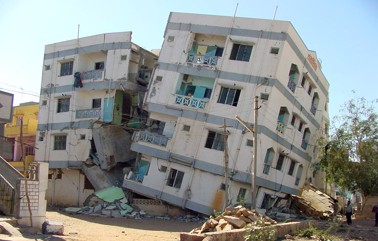
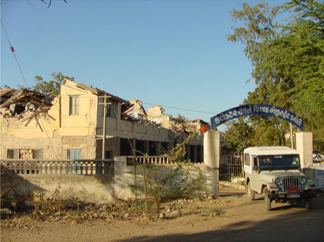
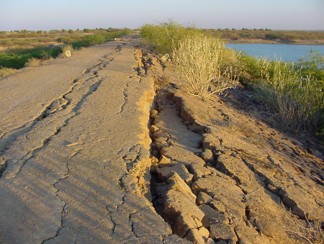
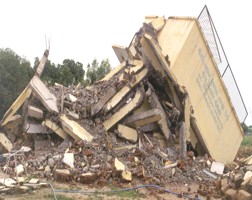
The devastation during the 2001 Bhuj Earthquake prompted academics, engineering professionals, and government bodies to restart long-term, fundamental initiatives aimed at improving Earthquake Safety in India. Over the past 25 years, India has made steady and consistent progress in raising awareness and building technical capacity. The Disaster Management Act of 2005, enacted by the Government of India, and the development of NDMA Guidelines on Earthquake Management were significant and important steps towards achieving earthquake-resilient infrastructure in India.
Earthquake Safety in India
Commemorating the 25th Year of 2001 Bhuj Earthquake
Several lessons have been learnt from the 26 January 2001 Bhuj Earthquake, a turning point for the Indian Civil Engineering and Architecture community. Significant and long-term steps have been taken by the Government of India, State Governments, Academic & Research Institutions, Civil, Structural & Architectural Societies and Organizations. In the 25th year of the Bhuj Earthquake, it is time to take stock of the progress made and deliberate on the future directions towards achieving earthquake-resilient infrastructure in India.
| # | Themes |
|---|---|
| 1 | Indian Standards and Earthquake Safety |
| 2 | Earthquake Safety of Heritage Structures |
| 3 | Earthquake Safety of Dams |
| 4 | Earthquake Retrofit of Existing Structures |
| 5 | New and Emerging Technologies for Housing and Infrastructure |
| 6 | Testing of Structures for Earthquake Effects |
Organizers
Partners

Committees
| Organizing Committee | |
|---|---|
| Patron | Professor N. P. Padhy, Director, MNIT Jaipur |
| Chairperson | Professor S. D. Bharti, Head, Civil Engineering, MNIT Jaipur |
| Co-Chairperson | Dr. Shailesh K. Agarwal, Executive Director, BMTPC |
| Secretary | Dr. Nishant Roy, Head, NCDMM, MNIT Jaipur |
| Joint Secretary | Dr. Jagajyoti Panda, Assistant Professor, NCDMM, MNIT Jaipur |
| Technical Advisory Committee |
|---|
| Sudhir K. Jain, Formerly Director, IIT Gandhinagar, and Vice-Chancellor, BHU |
| Krishna S. Vatsa, Member, NDMA, New Delhi |
| Sanjay Pant, Special Director General (Standards), Bureau of Indian Standards, New Delhi |
| R. Pradeep Kumar, Director, CSIR CBRI, Roorkee |
| Alpa R. Seth, Managing Director, VMS Consultants Private Limited, Mumbai |
| Jaswant N. Arlekar, R. S. Mandrekar & Associates |
| P. Vishnu Sai, EqSI, Hyderabad |
| T. K. Datta, IIT Delhi |
| Alok Goyal, IIT Bombay |
| Ravi Sinha, IIT Bombay |
| C. V. R. Murty, IIT Madras |
| R. S. Jangid, IIT Bombay |
| M. K. Shrimali, MNIT Jaipur |
| Vasant Matsagar, IIT Delhi |
| D. R. Sahoo, IIT Delhi |
| Subhadeep Banerjee, IIT Madras |
| S. T. G. Raghukant, IIT Madras |
| Rupen Goswami, IIT Madras |
| Arun Menon, IIT Madras |
| B. K. Maheshwari, IIT Roorkee |
Sponsorship
| Details | Sponsorship Category | |||||
|---|---|---|---|---|---|---|
| Platinum | Diamond | Gold | Silver | Bronze | Supporter | |
| Amount (Rs. Lakhs) Plus Institute Overhead @ 20% | 20.0 | 10.0 | 5.0 | 2.5 | 1.0 | 0.5 |
| Logo on Backdrop | - | |||||
| Exhibition Stall | ||||||
| Presentation (Minutes) | 7 | 5 | 5 | 5 | - | - |
| Catalogues Distribution | ||||||
Bank Details
Accommodation
Contact
Dr. Nishant Roy
Head, National Centre for Disaster Mitigation and Management
Malaviya National Institute of Technology, Jaipur 302017
eMail: nishant@mnit.ac.in | WhatsApp: +91 7003150254